

Garment rack systems are industrial display solutions that optimize product presentation and space efficiency across a wide range of sectors, from clothing retail and trade fair organizations to the hospitality industry and technical display areas. By preserving the visual integrity of products while improving accessibility, these systems allow vertical space to be utilized at maximum capacity.
Use of Garment Racks in Retail and Commercial Spaces
Designed as modular or fixed systems according to industry-specific requirements, garment racks accelerate product circulation in high-traffic areas while adding an aesthetic touch to store layouts.
- Retail Stores and Textile Businesses: They allow products to be displayed without wrinkling and organized according to color and size, making them easily accessible at eye level.
- Trade Fairs and Event Areas: Thanks to their lightweight and modular structure, they offer quick installation and dismantling, meeting the portable display needs of brands.
- Hotels and Restaurants: They create high-capacity storage solutions for use as cloakroom and coat rack systems in customer and guest areas.
- Educational and Sports Facilities: They enable bags, uniforms, and technical equipment to be stored and organized in a layered manner.
Operational Advantages of Using Garment Racks
Manufactured using profiles designed to withstand heavy-duty conditions, garment racks contribute directly to both store and warehouse operations:
- Space Efficiency: Vertical display architecture increases the product display capacity per square meter.
- Quick Product Access: They make it easier for customers and staff to find and access the products they need without wasting time.
- Flexible Store Layout Management: Thanks to modular connection components, shelving layouts and product groups can be quickly reorganized.
- Minimal Space Loss: They minimize floor space usage in narrow passageways and corner areas.
Garment Rack Models and Technical Types
Depending on the weight of the products to be displayed, the dimensions of the space, and the intended use, the main rack configurations include:
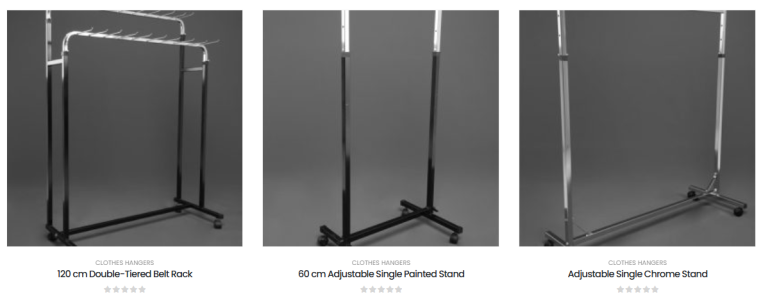
- Single and Double (T-Stand / Gondola) Racks: Their minimalist structure makes them suitable for displaying featured products or new-season collections.
- Multi-Level and Tiered Racks: They provide maximum capacity for chain stores that want to display large quantities of inventory at the same time.
- Folding and Portable Racks: These interlocking systems provide convenient transportation and storage solutions for trade fairs and field events.
- Rotating and Accessory Racks: Offering 360-degree accessibility, they are ideal for displaying small-volume products such as belts, bags, hats, and similar accessories.
- Wall-Mounted and Adjustable Racks: Thanks to rail-based (bastion/channel) profile structures, shelf and hanging heights can be adjusted with precision.
Rack Design for Trade Fairs and Display Areas
Proper product placement at trade fair stands directly affects visitor engagement. The following factors should be considered when creating an effective display layout:
- Visual Hierarchy: The main product groups that need to be highlighted should be positioned at focal points.
- Circulation Space: Ergonomics and walkways should be planned to ensure that visitor movement around the stand is not restricted.
- Corporate Lighting: Integrated spotlights or LED channels within the rack profiles can be used to ensure that product colors are displayed accurately.
Material Selection and Engineering Details
The service life of a rack depends on the quality of the materials selected according to its static and dynamic load requirements:
- Aluminum Profile: Preferred for mobile systems that require lightweight construction and corrosion resistance, particularly when frequent transportation is involved.
- Electrostatic Powder-Coated Steel: Provides high scratch resistance, impact durability, and a wide range of color options.
- Stainless Steel (Chrome/Satin): Offers long-lasting performance in high-humidity environments and is commonly preferred in the luxury retail segment.


Leave a Reply